 Ministry of Foreign Affairs, Republic of Burundi
A team from the Ministry of Foreign Affairs, Regional Integration and Development Cooperation carried out a series of meetings and visits in several provinces of Burundi to see the activities carried out by the International Rice Research Institute (IRRI) and to assess their impact on the beneficiaries of the evaluation of achievements.
On March 17 and 18, 2026, Mr. Anicet Mahoro, Director of International Organizations accompanied by his team, visited the Mutanga Campus for a briefing session with Mr. Joseph Bigirimana, Country Representative of the Institute for International Relations (IRRI), and his team. The objective of this meeting was to provide a summary of the Institute’s activities before commencing evaluation visits.
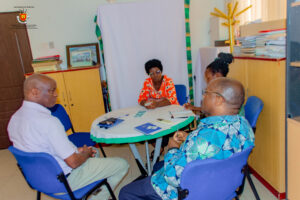
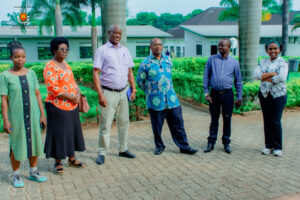
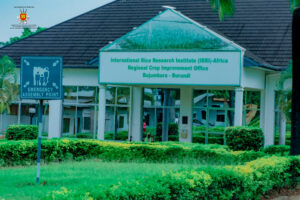
Following the briefing, the two teams traveled to Gihanga and Gifurwe in Bujumbura province to observe the IRRI’s achievements. There, they met with the agronomist in charge of local activities, who explained the teaching methods used with the beneficiaries. The focus is on the efficient use of seeds and on farming practices that significantly increase yields.
The feedback from farmers is positive: thanks to the techniques learned and the varieties provided by IRRI, rice farmers are achieving better profits while reducing their expenses. The fields observed in Mpanda and Gifurwe are in good condition, and the producers are easily implementing the recommended techniques.
On March 19, 2026, the mission continued its visits to the Nyamuswaga marsh in Ngozi. Farmers reported trainings from IRRI, but the condition of crops in the marsh was deemed unsatisfactory. The local agronomist explained that some people were not yet applying the techniques taught. Furthermore, producers reported a significant shortage of chemical fertilizers, a situation affecting the maintenance and productivity of their plots. According to the agronomist, almost 70% of beneficiaries are currently applying IRRI practices, an encouraging sign for wider adoption in the medium term.
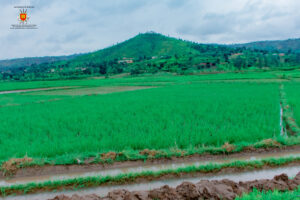
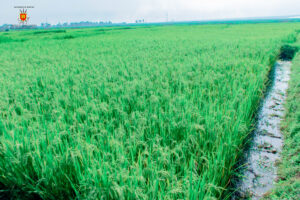
Nevertheless, a visit to the Kabuyenge marshland in Kirundo revealed healthy crops and widespread adoption of techniques promoted by IRRI. Farmers reported an amazing improvement in harvests despite difficulties relating to fertilizers access. The president of the Kabuyenge farmers’ association indicated that before IRRI’s intervention, they obtained around 3 tons per 3 hectares; today, yields can exceed 17 tons, which is a tangible impact of the Institute’s actions on the productivity and well-being of rice-growing communities.
It should be noted that the International Rice Research Institute (IRRI) is the world’s leading research organization dedicated to combating poverty, hunger, and malnutrition through rice science. Its mission is to improve the health and well-being of populations dependent on rice-based food systems, while promoting the environmental sustainability of rice farming for future generations.
This mission yielded conclusive results in several areas, notably Kabuyenge , where the adoption of IRRI innovations led to a significant increase in yields. Other areas, such as Nyamuswaga, are showing progress but still face challenges, particularly fertilizer shortages and incomplete adherence to the techniques taught. Overall, IRRI’s work in Burundi appears beneficial and promising for food security and improving rice farmers’ incomes. Sustained efforts, the continued dissemination of good practices, and the search for solutions to improve access to fertilizers remain essential to extending these benefits to all rice-growing areas.