 Ministry of Foreign Affairs, Republic of Burundi
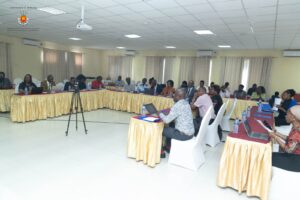
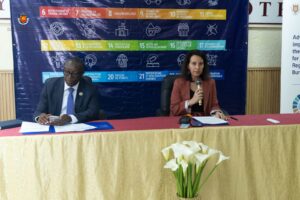 On Thursday, April 23, 2026, His Excellency Ambassador Edouard Bizimana, Minister of Foreign Affairs, Regional Integration and Development Cooperation, officially opened the national workshop for the validation of the report on the implementation of the Global Compact for Safe, Orderly and Regular Migration.
This workshop is an important step in the process of preparing the report, particularly for its technical and institutional validation, prior to its finalization and transmission to the relevant international bodies in New York, within the framework of the monitoring mechanisms of the Global Compact, in particular during the General Assembly.
In his speech, Minister Edouard Bizimana recalled that Burundi has subscribed to the Global Compact for Safe, Orderly and Regular Migration, adopted in 2018, as a non-binding reference framework, based on the principles of national sovereignty, international cooperation and respect for the fundamental rights of migrants.
In this regard, the country has resolutely committed itself to the progressive implementation of the 23 objectives of the Pact, particularly in the areas of collecting and using reliable data on migration, reducing the structural factors of irregular migration, facilitating regular migration pathways, protecting the rights of migrant workers, and preventing and combating human trafficking and the smuggling of migrants.
The Minister also emphasized that the report highlights significant progress made, including strengthening the legal and institutional framework for migration in Burundi, efforts to better regulate the mobility of Burundian workers abroad, and initiatives to protect and assist migrants, particularly the most vulnerable. He also noted persistent challenges, notably irregular migration, resource mobilization, and inter-institutional coordination.
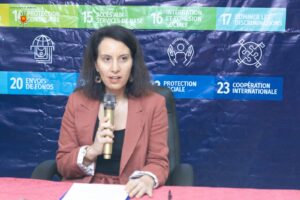 Taking the floor in turn, the Head of Mission of the International Organization for Migration (IOM) in Burundi, Ms. Emanuela Muscarà welcomed the ongoing efforts by the Burundian authorities to strengthen migration governance, structure inter-institutional coordination mechanisms and promote orderly, humane and development-oriented migration.
She indicated that this validation demonstrates Burundi’s commitment to actively contributing to the international dialogue on the implementation of the Global Compact, highlighting concrete progress in the area of migration governance. According to her, this process also offers an opportunity to consolidate achievements, build on progress made, and identify future priorities with clarity and ambition.
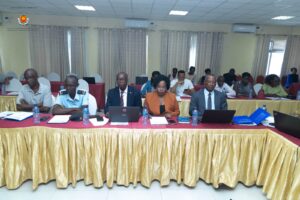
In conclusion, Ms. Muscarà reiterated that the Global Compact, negotiated by member States, constitutes a non-legally binding framework for cooperation. It does not create new rights, but reaffirms existing commitments and principles regarding the protection of migrants.