 Ministry of Foreign Affairs, Republic of Burundi
This Tuesday, September 22, 2026, in Bujumbura, at the Kiriri Garden Hotel, Mr. Sophonie NITUNGA, Permanent Secretary in charge of Foreign Affairs and Development Cooperation, officially opened the hybrid joint meeting of the technical working group on sexual and reproductive health, and maternal, newborn, child, and adolescent health, HIV/AIDS, sexually transmitted infections, and tuberculosis.The ceremony took place in the presence of representatives from the East African Community (EAC) Secretariat, delegates from the Community’s Partner States, representatives of United Nations agencies, as well as numerous experts from different countries in the region, some physically present and others connected remotely.
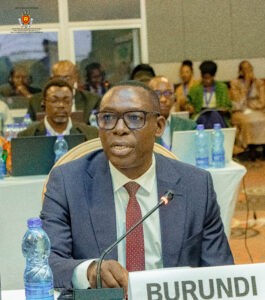
In his address, Mr. NITUNGA particularly welcomed the presence of the EAC Secretariat representatives and Partner States’ experts, emphasizing that their mobilization demonstrates a shared commitment to strengthening regional cooperation against health challenges affecting East African populations.
Indeed, he expressed Burundi’s gratitude to the East African Community Secretariat, through its Integrated Health Department, for organizing this meeting, as well as to the 2gether4SRHR Programme—a joint United Nations regional programme involving UNAIDS, UNFPA, UNICEF, and WHO—for its unwavering support to regional efforts regarding sexual and reproductive health and rights. He also commended the financial and technical contribution of the RAISE Mechanism, whose support strengthens regional health systems and accountability, illustrating the importance of collective action against health challenges that cross national borders.
Mr. NITUNGA stressed the central role of health information in shaping effective public health policies. Without reliable and timely data, it becomes difficult to correctly identify the populations’ needs, measure progress made, allocate resources optimally, and design interventions adapted to field realities.
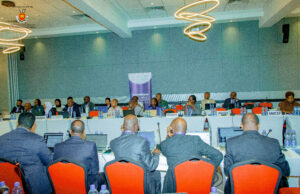
Addressing the specific challenges of women, mothers, and children’s health, he recalled that the sexual and reproductive health and rights of women and girls, as well as the health of newborns, children, and adolescents, require sustained attention, while the fight against HIV/AIDS, sexually transmitted infections, and tuberculosis continues to require coordinated interventions and evidence-based responses. In this regard, he presented the East African Community as a valuable platform enabling Partner States to work together and develop common approaches, as regional integration, according to him, is not limited to economic cooperation alone.
Furthermore, Mr. NITUNGA recalled the three major objectives of this technical meeting: strengthening regional integration and coordination in the field of sexual and reproductive health and maternal, newborn, child, and adolescent health; assessing progress made and identifying priority actions to strengthen routine health information systems; and sharing experiences, innovations, and best practices among the region’s countries. The conclusions and instruments resulting from this work are expected to be submitted to the 26th meeting of the Sectoral Council of EAC Ministers in charge of Health, scheduled for October 2026.
Finally, the Permanent Secretary invited all participants to conduct their deliberations in an open and constructive spirit, based on evidence and mutual learning, emphasizing the importance of concrete and effectively applicable recommendations. He reaffirmed Burundi’s attachment to the EAC integration process and the Burundian Government’s commitment to facilitating the smooth running of this meeting.