 Ministry of Foreign Affairs, Republic of Burundi
F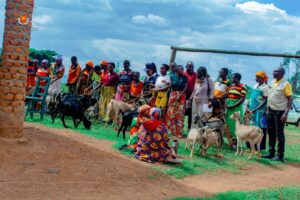 rom 16 to 20 November 2026, the Ministry of Foreign Affairs, Regional Integration and Development Cooperation is conducting a rigorous monitoring and evaluation exercise of World Food Programme (WFP) projects in the provinces of Bujumbura, Butanyerera and Buhumuza. The exercise aims to assess the relevance, effectiveness, efficiency, sustainability and impact of these projects, gather feedback and concerns from beneficiaries, and make recommendations to strengthen accountability and transparency.
The monitoring and evaluation exercise covered the World Food Programme (WFP) projects in Maramvya-Mutimbuzi, including the Girumwete Dukore Cooperative (“Let Us Work with Courage”), where performance has significantly exceeded expectations. However, the challenge of compulsory price-setting has resulted in losses.
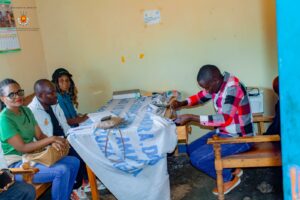 In Ngozi, on 17 November 2026, the delegation observed that a machine provided by WFP to Girubuzima Company was not being used. The company expressed the need for higher-capacity machines. The delegation was informed that the machine had only been provided by WFP as a sample. It therefore encouraged the company to make greater efforts to acquire the equipment it considers essential for its activities. Given the long period during which the machine has remained unused, WFP should avoid purchasing equipment that it considers unnecessary, as this would result in a financial loss. The funds could instead have been used to cover the additional cost of purchasing a higher-capacity machine directly.
In Mwumba, Ngozi Commune, on Gatwe Hill, commonly known as Sabanegwa, the delegation visited the “Tezimbere Ibibondo Bavyeyi” Association, which works to strengthen community resilience and support smallholder farmers. The delegation noted that WFP, through Caritas, has supported vulnerable households and helped them overcome poverty through donations and useful training. The local population is thus moving from vulnerability towards self-reliance. However, the beneficiaries had not been informed of the amount allocated to the project. The delegation appreciated the results achieved, while noting that the projects allocated budget remained unknown.
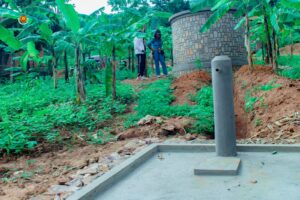 On 18 November 2026, in Gitobe, the water supply project, launched in September 2026 and scheduled for completion by the end of December 2026, had already enabled the construction of water reservoirs and the rehabilitation of taps, with only the installation of pipes remaining to be completed. In Nyagisozi, the distribution of FBU 380,000 to one group and FBU 200,000 to another group in May and June 2026 had contributed to satisfactory results in agriculture and small-scale livestock farming. However, a risk of loss of trust was also identified due to failure to respect the agreed assistance period. The population expressed disappointment that WFP had promised to return with food supplies, which they were still waiting to receive. The amount allocated to this project also remained undisclosed.
On 19 November 2026, in Muyinga, the delegation visited the PASSAB / Cash for Work project in Butihinda, launched in September 2025. The project was found to lack adequate field-level monitoring, with some contour lines not meeting the required standards and seedlings being removed too late.
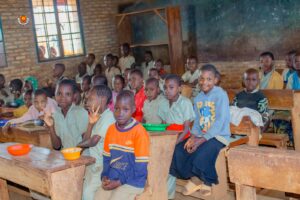 At Bihogo II Primary School, irregular food deliveries are undermining the progress already made. The delegation observed that children were not receiving meals regularly at school. This highlighted the need to ensure regular deliveries, improve technical monitoring and communication with schools, and make school feeding programmes sustainable in order to achieve lasting and measurable impact.
Overall, the findings from all these visits confirm that cooperation with WFP is producing visible results, including protected land, increased household income, children attending school and declining dropout rates. Another key finding, however, is the lack of transparency regarding the amounts allocated to the projects. In this regard, the Ministry recommends that WFP publish the budget for each project, indicating the total amount, the allocation of funds by activity and the disbursement schedule, in a document accessible to the Ministry, WFP and the beneficiaries. It also recommends setting up a display board showing the implementation status of planned activities.
In brief, the recommendations include strengthening technical monitoring of contour lines and nurseries, ensuring regular and predictable food deliveries to schools, improving the quality of meals, and enhancing communication with schools regarding the quantities delivered. Another key finding was that WFP should operate with greater transparency, as beneficiaries of all the projects visited by the Ministry indicated that they had not been informed of the amounts allocated to the projects.
Finally, the Ministry responsible for Foreign Affairs, in its role as a guarantor of cooperation, will continue to monitor, evaluate and advocate for every project to deliver a lasting and measurable impact on the population.